There’s a moment in every student’s math journey when numbers stop behaving the way they used to. Up to a point, math feels pretty straightforward—patterns, equations, maybe a few formulas you memorize and reuse. And then along comes trigonometry with its angles, identities, strange Greek letters, and rules that seem to bend in every possible direction. Some people try to power through it alone. Others pretend to “get it” and hope the tests magically go well. But more often than not, trigonometry is the fork in the road where students decide whether math is a friend or an enemy.
And honestly, it doesn’t have to feel that dramatic. Sometimes what makes the biggest difference isn’t how “smart” you are, but how clearly someone can walk you through the chaos. That’s where a thoughtful, adaptable trigonometry tutor ↗ can make all the difference—not just for grades, but for confidence.
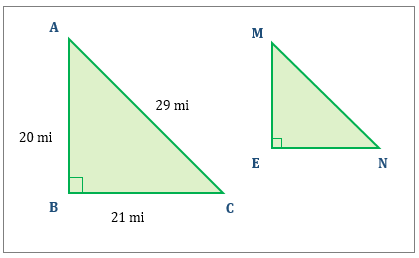 I’ve always believed that trigonometry isn’t actually difficult; it’s just unfamiliar. It’s the academic equivalent of moving to a new city—at first nothing makes sense, the streets feel random, and you can’t remember which corner store sells what. But once someone explains the grid, the shortcuts, and the tricky intersections, the whole place becomes manageable, even fun in a weird way. Trig works the same. A good teacher doesn’t just give you formulas; they hand you a map.
Of course, the way we learn today has changed dramatically. Everything’s moved online, from grocery shopping to piano lessons, so it’s no surprise tutoring followed the same route. In fact, the idea of an Online trigonometry tutor ↗ has shifted from a niche option into something incredibly practical. No commuting, no awkward “extra class” feeling, no rushing after school. Just a comfortable space, your own notes, and someone on the screen who actually knows how to make sine, cosine, and tangent less intimidating. And trust me, comfort matters more than most people realize. When you’re not stressed about the environment, your brain has the freedom to learn.
But let’s be honest: not all tutors are equal. Some go straight into formulas without checking if you even understand why triangles behave the way they do. Others rely on stiff worksheets and overly complicated explanations—as if math needs to sound fancy to be correct. The best tutors, though, feel more like guides than instructors. They listen, they watch how you think, and they adjust. They’re not married to one method; they’ll try three or four different ways to explain the same idea until something finally clicks. And that “click” moment? It’s priceless. It’s the little spark that turns anxiety into curiosity.
What really sets trigonometry apart is how connected it is to the real world, even if textbooks don’t always show it. You see trig in architecture, music, physics, animation—even in how your phone tracks your location. Once students understand that it’s not just a random chapter in the syllabus, their whole attitude shifts. Suddenly, the angles in a triangle become tools, not obstacles. A skilled tutor will nudge students toward seeing these connections, weaving in real examples so the subject stops feeling like abstract theory floating in space.
Another thing people underestimate is the value of pacing. Trigonometry gets tough when everything feels rushed. The unit circle alone can trigger panic if you don’t build it step by step. A patient tutor slows things down, breaks ideas into natural chunks, and gives your mind breathing room. It’s like cooking—nobody throws all the ingredients into the pan at once. You add things gradually, let them simmer, let the flavors settle. Math deserves the same gentleness.
Then there’s the confidence factor. A lot of students walk into trig already believing they’re “bad at math.” Maybe someone told them that. Maybe a past test went poorly. But learning anything while feeling defeated is nearly impossible. Gentle encouragement from the right mentor can quietly rebuild that confidence. A few small wins, a few problems solved independently, and suddenly the student starts thinking, “Maybe I can do this.” And once that belief kicks in, progress speeds up fast.
Of course, online tutoring comes with its own perks beyond flexibility. Screen-sharing tools, virtual whiteboards, saved notes—these things actually make explanations clearer than in many in-person settings. You can replay parts of a lesson, revisit old problems, or send quick questions without waiting for the next session. It feels less formal, more like having a math partner who’s just a message away.
Some people wonder whether hiring a tutor is worth it at all—whether it’s better to just slog through YouTube videos or solve extra worksheets. Those things help, sure, but they can’t adapt to you. A tutor can. And when you’re dealing with a subject full of tiny interconnected rules, that adaptability matters more than any textbook or lecture ever will.
If there’s one thing I’ve learned, it’s this: understanding trigonometry is much more about mindset than raw ability. When someone explains it in a calm, human way—without rushing, without judgment—the subject slowly unfolds. It stops feeling like a wall and starts feeling like a puzzle. And puzzles are meant to be solved.
So if you’re struggling with trig, or even if you’re just trying to get ahead before the tough chapters arrive, getting help isn’t a sign of weakness. It’s a smart move. It’s choosing clarity over confusion, progress over stress. And with the right person guiding you, that journey becomes a lot smoother than you might expect.
In the end, a tutor isn’t just someone teaching angles and functions. They’re someone helping you build a foundation that carries into physics, calculus, engineering, architecture—whatever comes next. Trigonometry is a gateway, not a roadblock. Once you get through it, the rest of math starts opening up in unexpectedly satisfying ways.